
What does being a Forex trader mean?
Forex trading, short for foreign exchange trading, has become one of the world’s most accessible and active financial markets. Operating 24 hours a day, five days a week, it offers opportunities for individuals seeking financial freedom, flexibility, and global engagement.
Whether your goal is independence, personal growth, or participation in global finance, Forex trading can provide a pathway—if approached with discipline and education.
Quick Reference Table
| Consideration | Key Focus | Why It Matters |
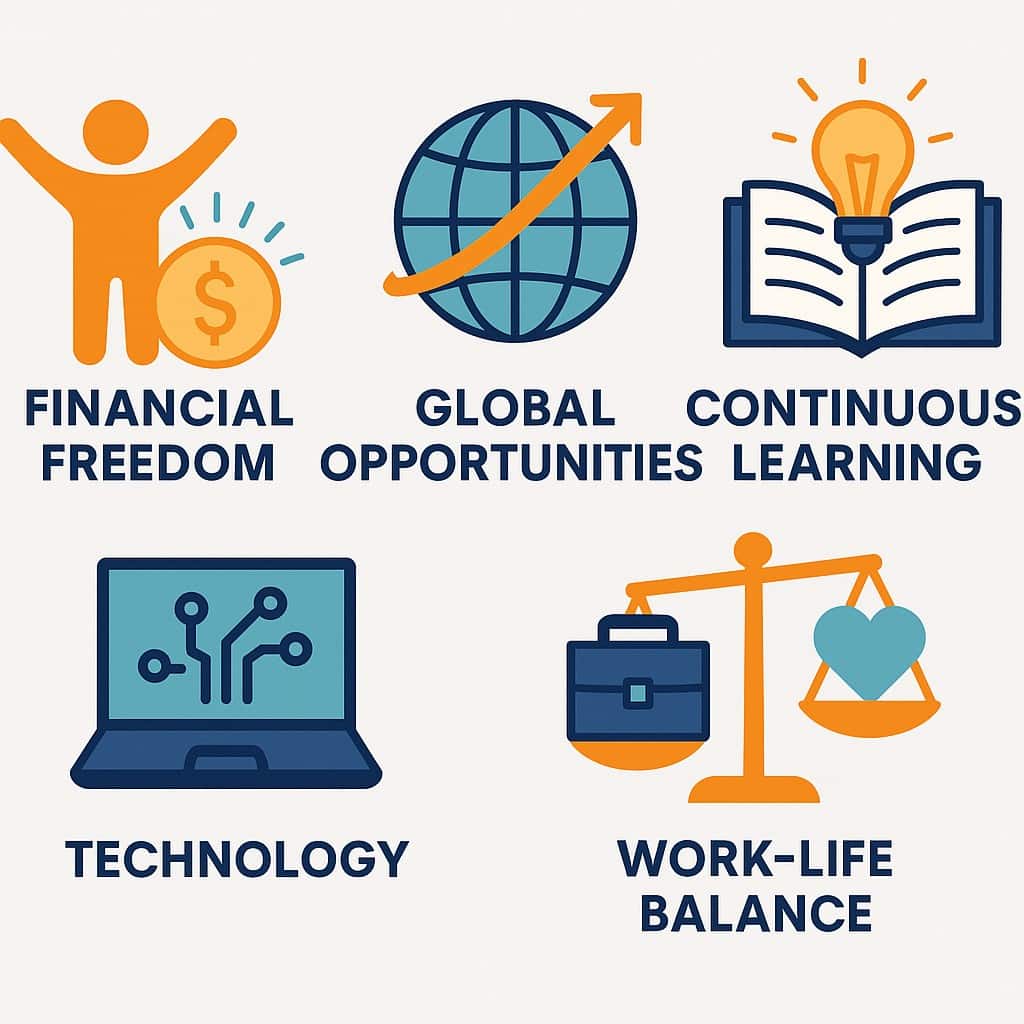
| Financial Freedom | Potential for profit and independence | Enables wealth-building and lifestyle flexibility |
| Global Opportunities | International exposure and diversification | Expands reach beyond local markets |
| Continuous Learning | Accessibility and self-education | Allows entry without formal finance background |
| Technology | Modern tools and automation | Enhances decision-making and trading efficiency |
| Work-Life Balance | Flexibility and independence | Promotes freedom and quality of life |
TL;DR – What Being a Forex Trader Means
Being a Forex trader means participating in a 24-hour global market where currencies are exchanged, and financial independence can be achieved.
This guide explains five key aspects that define the trader’s lifestyle: financial freedom, global opportunities, continuous learning, technological innovation, and work-life balance.
Table of Contents
- TL;DR – What Being a Forex Trader Means
- Can Being a Forex Trader Bring Financial Freedom?
- Does Being a Forex Trader Bring Global Opportunities?
- Can You Become a Forex Trader by Learning?
- What Technological Advancements Are There in Forex Trading?
- How Does Being a Forex Trader Provide Work-Life Balance?
- Conclusion
- Quiz: Understanding What It Means to Be a Forex Trader
- Answer Key
- What’s the Next Step?
- Forex Trading Disclosure Statement
Can Being a Forex Trader Bring Financial Freedom?
| Theme | Key Idea | Takeaway for Traders |
| Financial Freedom | Forex trading offers independence through accessibility, liquidity, and flexibility. Understanding both opportunities and risks is essential before pursuing this path. | Develop a structured trading plan, apply strict risk management, and refine your skills before scaling up. |
| Potential for High Returns | Market volatility allows traders to profit from currency price movements by anticipating trends. However, volatility also introduces risk. | Focus on consistency and preparation—high returns come from a disciplined strategy, not luck. |
| Accessibility and Low Capital Requirements | Forex is one of the most accessible global markets. Many brokers allow trading with small deposits and micro accounts. | Start small, learn responsibly, and expand as your skills and confidence grow. |
| Flexibility in Trading Hours | The foreign exchange (Forex) market operates 24 hours a day, 5 days a week, across multiple global time zones. | Trade part-time or full-time—choose hours that fit your lifestyle for better balance and focus. |
Does Being a Forex Trader Bring Global Opportunities?
| Theme | Key Idea | Takeaway for Traders |
| Global Exposure | Forex connects you to international economies, far beyond local markets. | Discover how global economic trends influence currencies and help diversify your trading risk. |
| Diversification of Currency Pairs | Popular pairs like EUR/USD, GBP/JPY, and USD/JPY offer worldwide opportunities. | Spreading trades across pairs reduces risk and captures a diverse range of market movements. |
| Insight into Global Economies | Traders closely monitor interest rates, inflation, and geopolitical events in real-time. | Stay informed—global awareness sharpens analysis and timing. |
| Market Liquidity | Deep liquidity ensures quick order execution, even with large trades. | Take advantage of fast, efficient markets regardless of capital size. |
| Geopolitical Events and Currency Movements | Elections, wars, and trade disputes often trigger volatility. | Anticipate major events and plan for short-term swings. |
| International Trading Sessions | Four main sessions—Sydney, Tokyo, London, and New York—offer unique rhythms and behaviors. | Learn from sessions that overlap to optimize trade timing and strategy. |
Can You Become a Forex Trader by Learning?
| Theme | Key Idea | Takeaway for Traders |
| Accessibility Through Education | Forex welcomes anyone willing to learn—no finance degree required. | Curiosity, discipline, and consistent practice are more valuable than credentials. |
| Low Barriers to Entry | Many traders are self-taught and begin with small accounts. | Experience and adaptation matter more than formal training. |
| Accessible Online Platforms | Modern trading platforms include charts, indicators, and tools on any device. | Technology simplifies participation and speeds up learning. |
| Demo Accounts | Simulated trading builds experience without financial risk. | Practice extensively before trading live money. |
| Low Minimum Investment | Micro and mini accounts require small deposits. | Start small to learn safely and control emotions. |
| Leverage Options | Leverage increases buying power but also risk. | Use leverage cautiously and always set stop losses. |
| Abundant Educational Resources | Articles, webinars, and guides are widely available—many of them are free. | Continuous learning keeps you competitive in dynamic markets. |

Looking for a Strategy?
Download the Six Basics of Chart Analysis and sign up for Forex Forecast to learn a bottom-up approach to analyzing Forex markets and weekly market updates.
What Technological Advancements Are There in Forex Trading?
| Theme | Key Idea | Takeaway for Traders |
| Automation and Algorithms | Automated systems can execute trades based on predefined rules, but are not guaranteed to succeed. | Test thoroughly; automation complements discipline, not replaces it. |
| Algorithmic Trading Strategies | Algorithms analyze data and execute at lightning speed. | Use with caution—human oversight remains essential. |
| Mobile Trading Apps | Access the market anytime, anywhere via mobile platforms. | Monitor and adjust trades on the go for flexibility. |
| Advanced Charting Tools | Modern platforms provide deep analysis and customization. | Combine technical tools with consistent analysis for accuracy. |
| Risk Management Features | Stop-loss and take-profit tools help control exposure. | Always predefine these levels to maintain discipline. |
| Real-Time News and Analysis | Integrated feeds keep traders informed about global events. | Quick reactions to news can give a strategic edge. |
How Does Being a Forex Trader Provide Work-Life Balance?
| Theme | Key Idea | Takeaway for Traders |
| Flexible Hours | The global 24-hour market lets traders choose their schedule. | Align trading with personal rhythms and responsibilities. |
| Location Independence | All you need is an internet connection to trade anywhere. | Achieve freedom to work remotely or travel. |
| Tailored Trading Hours | You can trade at times that suit your energy and focus levels. | Matching trading times to your productivity boosts performance. |
| Part-Time or Full-Time Options | Start part-time and expand as skills grow. | Build experience safely before making trading your primary income. |
| Reduced Costs | No commute or office overhead required. | Lower expenses contribute directly to financial freedom. |
| Quality of Life | Responsible trading promotes balance and less stress. | Gain freedom to enjoy family, hobbies, and personal growth. |
Conclusion
Being a Forex trader means more than just buying and selling currencies—it’s a lifestyle that blends independence, global awareness, and personal discipline.
While the market offers high potential rewards, success requires education, planning, and risk control.
Start small, stay consistent, and always approach trading as a skill to master over time.
Quiz: Understanding What It Means to Be a Forex Trader
- What makes Forex trading appealing for those seeking financial freedom?
a. Fixed returns like traditional savings
b. 24-hour accessibility and potential for high returns
c. Guaranteed profits through automation
d. Elimination of trading risk - Which factor provides Forex traders with exposure to global opportunities?
a. Focusing only on one domestic currency
b. Trading multiple currency pairs across economies
c. Avoiding geopolitical events
d. Using leverage alone - What is one reason Forex trading is considered accessible to beginners?
a. It requires large capital investments
b. It is regulated like hedge funds
c. It offers demo accounts and online learning
d. It requires a university degree - Why should traders be cautious when using leverage?
a. It only increases profits
b. It can magnify losses as well as gains
c. It limits position sizing
d. It is restricted by all brokers - How can Forex trading support a healthy work-life balance?
a. By enforcing strict office hours
b. By requiring relocation to major financial centers
c. By offering flexibility in hours and location
d. By removing all financial risk
Answer Key
- b. 24-hour accessibility and potential for high returns
- b. Trading multiple currency pairs across economies
- c. It offers demo accounts and online learning
- b. It can magnify losses as well as gains
- c. By offering flexibility in hours and location
What’s the Next Step?
Use this guide to assess whether being a Forex trader is for you.
Want to improve further? Download the Six Basics of Chart Analysis—a free resource that gives you a strong technical foundation. With it, you’ll also receive Forex Forecast, delivered weekly to your inbox, including:
- Trade ideas with real chart examples
- Case studies of profitable trades
- Educational guides and videos
- Updates from PositionForex.com
- Invitations to free webinars
Forex Trading Disclosure Statement
Risk Warning:
Forex trading involves significant risk and may not be suitable for all investors. The leveraged nature of Forex trading can work both for and against you, leading to substantial gains or losses. Before trading Forex, you should carefully consider your financial objectives, experience level, and risk tolerance. It is possible to lose more than your initial investment, and you should only trade with money you can afford to lose.
Market Risks and Volatility:
Forex markets are influenced by global economic, political, and social events, which can result in unpredictable price movements. High market volatility can lead to sudden and substantial changes in currency values, potentially causing losses that exceed your initial deposit.
Leverage Risks:
Leverage amplifies both potential gains and potential losses. While leverage can increase profitability, it also increases the risk of significant losses, including the loss of your entire trading capital.
Trading Tools and Technology Risks:
Forex trading platforms, including those offered by brokers, are subject to technology risks, such as system failures, latency issues, and potential errors in price feeds. Traders should be aware that these risks can impact the execution of trades and trading outcomes.
No Guarantee of Profitability:
Past performance in Forex trading is not indicative of future results. There is no guarantee that you will achieve profits or avoid losses when trading Forex. Market conditions and individual trading strategies vary, and no trading system can eliminate the inherent risks of Forex trading.
Educational Purposes Only:
Any information provided about Forex trading, including strategies, analysis, or market commentary, is for educational purposes only and should not be considered financial advice. Consult a qualified financial advisor or tax professional before making any trading decisions.
Regulatory Compliance:
Forex trading is regulated differently in various jurisdictions. Ensure that you are trading with a licensed and compliant broker in your country of residence.
Responsibility:
You are solely responsible for your trading decisions and the associated risks. It is your duty to understand the terms and conditions of Forex trading, including margin requirements, stop-losses, and other risk management tools.
Acknowledgment:
By engaging in Forex trading, you acknowledge that you have read, understood, and accepted this disclosure statement. You accept full responsibility for the outcomes of your trading decisions and agree to trade at your own risk.
This disclosure is intended to provide an overview of the risks associated with Forex trading and is not exhaustive. For additional information, consult your broker and other reliable financial resources.