
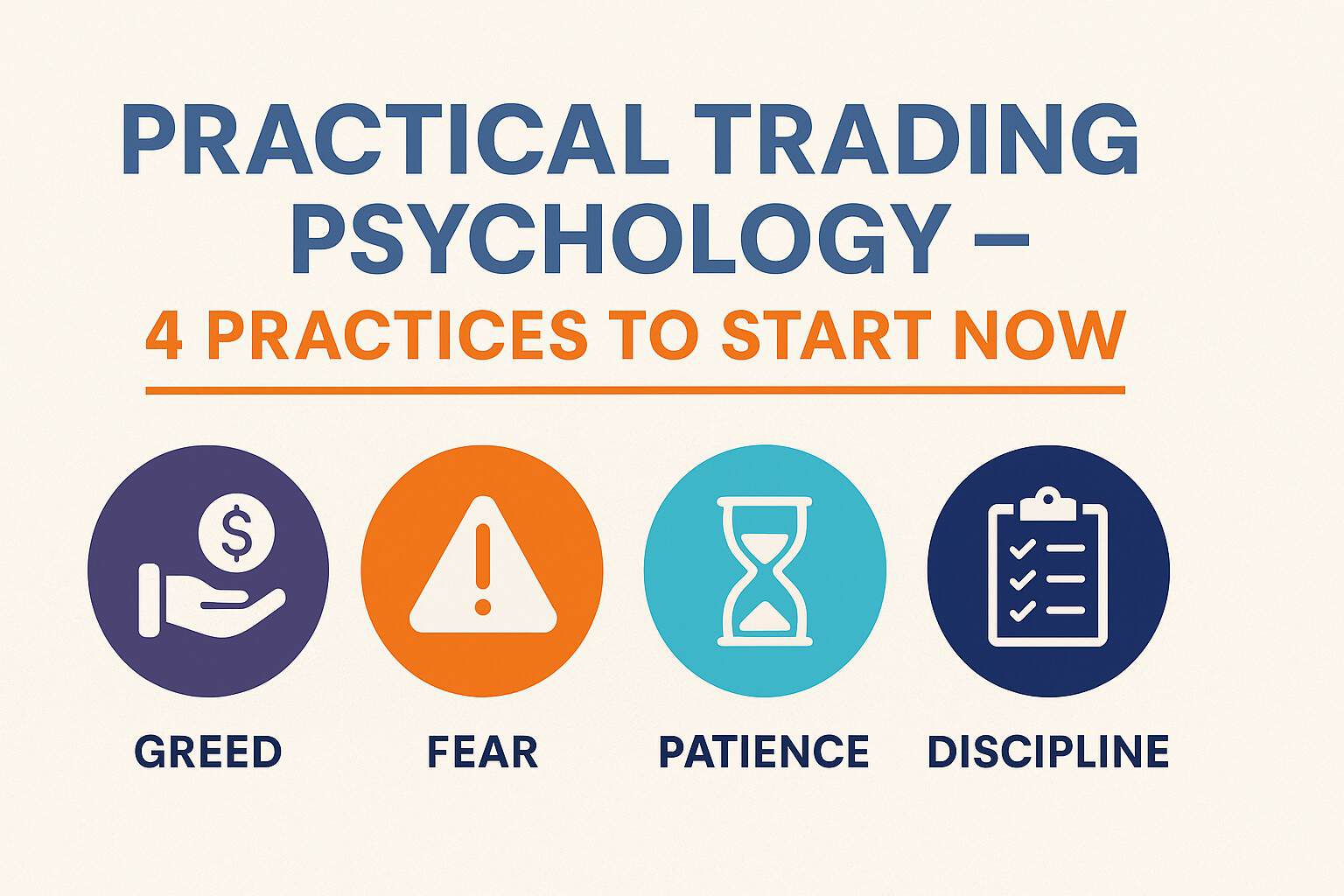
Practical trading psychology is one of the most critical factors determining a trader’s success or failure.
Your emotions, mindset, and behavior directly affect your decision-making and trading performance. While technical analysis and strategy are essential, your mental discipline ultimately determines your consistency and long-term profitability.
This guide explores four foundational practices of trading psychology—Greed, Fear, Patience, and Discipline—and how to manage them effectively.
You’ll also learn practical methods for building self-awareness, developing emotional control, and integrating mindfulness into your trading.
TL;DR – Master These 4 Psychological Practices
This article teaches you how to build a stronger trading mindset by focusing on:
- Greed – Recognize and manage overconfidence and impulsive risk-taking.
- Fear – Prevent hesitation and premature exits from trades.
- Patience – Wait for high-probability setups and follow your plan.
- Discipline – Stick to your trading strategy and manage risk consistently.
You’ll also learn how mindfulness, continuous education, and journaling help refine your emotional balance and performance in Forex trading.
Quick Reference: Core Elements of Practical Trading Psychology
| Practice | Core Focus | Why It Matters |
| Greed | Managing impulsive overconfidence | Prevents overtrading and reckless risk-taking |
| Fear | Overcoming hesitation | Helps you act decisively and avoid missed opportunities |
| Patience | Waiting for confirmation | Improves trade quality and reduces emotional reactions |
| Discipline | Following your plan | Builds consistency and protects your capital |
Table of Contents
- TL;DR – Master These 4 Psychological Practices
- Quick Reference: Core Elements of Practical Trading Psychology
- What Is the Role of Emotions in Practical Trading Psychology?
- What’s Needed to Develop Practical Trading Psychology
- Why Mindfulness and Control Are Essential for Traders
- Learning from Mistakes
- Conclusion
- What’s the Next Step?
- Quiz: Understanding Practical Trading Psychology
- Frequently Asked Questions
- Forex Trading Disclosure Statement
What Is the Role of Emotions in Practical Trading Psychology?
Emotions drive every trading decision you make. They can inspire confidence or cause costly mistakes. Understanding how emotions influence your trading is the foundation of psychological mastery. When unchecked, emotions such as greed or fear can lead to poor risk management, impulsive trading, and inconsistency.
Let’s examine how emotions influence your trading outcomes and how to manage them effectively.
Core Trading Emotions: Mastering the Mind Behind Every Trade
| Emotion | Impact on Trading | Common Symptoms | How to Overcome It |
| Greed – The Silent Saboteur | Greed distorts perception and encourages reckless risk-taking. It leads traders to overextend and disregard rules when profits are present. | • Overtrading or increasing position sizes beyond comfort.• Holding trades too long while chasing profits.• Ignoring stop-losses or proper risk-reward ratios. | Stay grounded in your plan. Define profit targets and risk limits before each trade, and commit to them regardless of emotions. |
| Fear – The Paralyzer | Fear inhibits decision-making and erodes confidence. It causes traders to exit too early or avoid valid opportunities altogether. | • Closing trades prematurely.• Avoiding setups that meet criteria.• Constant second-guessing and hesitation. | Reframe losses as data. Focus on the process, not the outcome. Build trust in your strategy through repetition and consistent review. |
| Patience – The Virtuous Ally | Patience keeps traders aligned with their strategy and prevents impulsive reactions. It allows for clarity and timing. | • Entering trades too early without confirmation.• Abandoning the plan out of boredom or frustration.• Overtrading during quiet markets. | Wait for ideal setups when technical and fundamental signals align. Follow entry and exit rules strictly—patience is active discipline, not passivity. |
| Discipline – The Pillar of Success | Discipline unites every aspect of trading psychology. It transforms strategy into consistent action. | • Ignoring trading rules when emotional.• Inconsistent position sizing or risk application.• Failing to manage emotional triggers. | Follow your trading plan precisely. Predefine stop-loss and take-profit levels, apply consistent position sizing, and monitor emotional responses. |
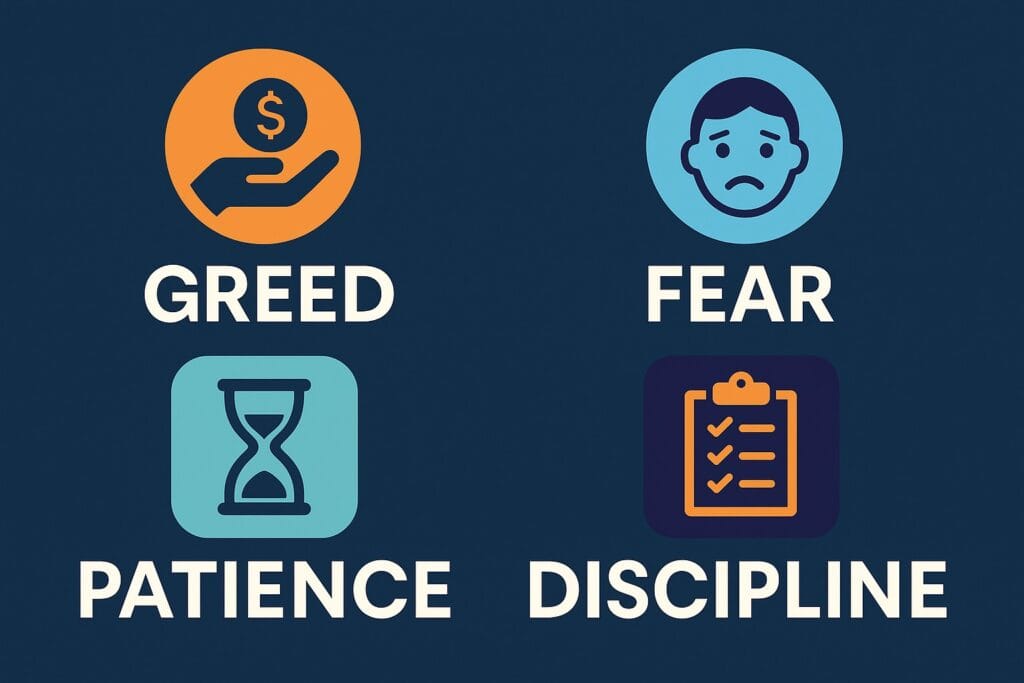
Developing discipline takes repetition, reflection, and accountability. Each time you stick to your plan, you reinforce the habit that leads to consistency.

Looking for a Strategy?
Download the Six Basics of Chart Analysis and sign up for Forex Forecast to learn a bottom-up approach to analyzing Forex markets and weekly market updates.
What’s Needed to Develop Practical Trading Psychology
Building strong trading psychology is an ongoing process. It requires emotional awareness, a clear plan, risk control, and commitment to continuous growth. The following areas form the foundation of practical trading psychology.
Mastering Forex Trading Psychology
| Theme | Key Idea | Practical Actions for Traders | Psychological Benefit |
| Self-Awareness – Know Thyself | Understanding your emotional triggers and trading behavior is the foundation of consistent decision-making. | • Keep a detailed trading journal of every trade, thought, and emotion.• Develop emotional intelligence—notice feelings before they influence actions. | Improves emotional control, reduces impulsive mistakes, and promotes deliberate decision-making. |
| Risk Management – Protect Your Capital | Risk management safeguards both your money and your mindset. | • Use proper position sizing within your risk tolerance.• Always set stop losses before entering trades.• Diversify across currency pairs to reduce exposure. | Preserves confidence, reduces fear, and reinforces emotional stability over time. |
| Trading Plan – Your Roadmap to Success | A clear plan eliminates emotional guesswork and builds trading discipline. | • Set measurable objectives such as profit targets and drawdown limits.• Define entry and exit rules based on clear signals.• Maintain favorable risk–reward ratios for consistent performance. | Builds confidence, clarity, and consistency in trading execution. |
| Continuous Education – Stay Informed | The Forex market evolves daily—successful traders evolve with it. | • Track global economic news and currency events.• Take ongoing courses or attend webinars.• Review past trades to learn from both wins and losses. | Encourages adaptability, reinforces skill growth, and sustains long-term success. |
| Mindfulness – Staying Calm Under Pressure | Mindfulness sharpens focus and emotional regulation during volatility. | • Practice daily meditation for focus and composure.• Use deep breathing to manage stress.• Visualize disciplined trading behavior and positive results. | Enhances focus, emotional balance, and resilience under pressure. |
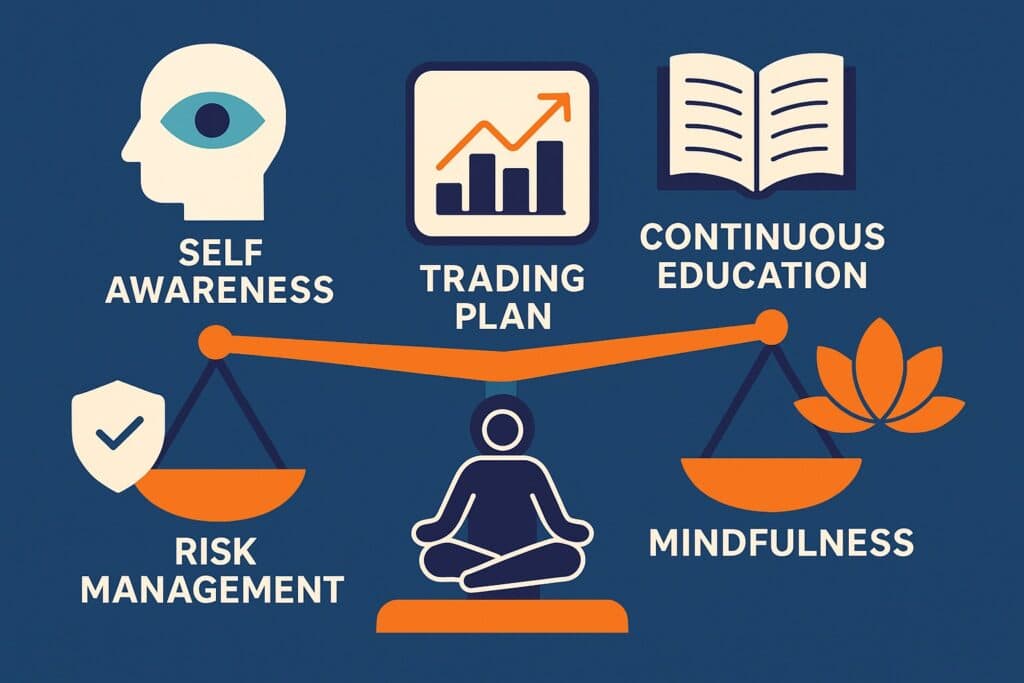
Why Mindfulness and Control Are Essential for Traders
Mindfulness and control work together to create emotional stability. They prevent destructive reactions and keep your trading aligned with logic and planning.
Mindfulness keeps you present, focused, and emotionally balanced. It improves patience, reduces impulsivity, and enhances awareness.
Control empowers you to act deliberately—executing your strategy rather than reacting emotionally.
Through regular practice of both, traders gain confidence and consistency even under pressure.
Learning from Mistakes
Mistakes are inevitable in Forex trading, but they’re also valuable. Viewing them as learning tools is key to improvement.
- Analyze Your Trades: Review entries, exits, and emotions to identify recurring patterns.
- Adapt and Evolve: Adjust your plan and behavior based on the insights you gain.
- Seek Mentorship: Engage with experienced traders for feedback and accountability.
- Keep a Journal: Document every decision to track progress and reinforce learning.
Each mistake offers data for growth—use it to strengthen your strategy and resilience.
Conclusion
Mastering trading psychology is a lifelong pursuit. Emotional control, patience, discipline, and mindfulness are what separate consistent traders from impulsive ones.
Your emotions can either empower your performance or sabotage your results. Commit to ongoing self-improvement and reflection. In time, these psychological principles will become as vital to your strategy as your charts and indicators.
What’s the Next Step?
Take a moment to evaluate your current trading psychology. Identify the emotional patterns that most significantly influence your decisions and apply the techniques outlined in this guide to address them.
If you want to strengthen your analytical foundation, download the Six Basics of Chart Analysis—free. You’ll also receive the Forex Forecast every Sunday, featuring:
- Trade ideas and setups using the Six Basics.
- Case studies from real-world trades.
- Educational guides and videos.
- Links to new articles and upcoming webinars.

Both resources are designed to help you trade with confidence and consistency.
Quiz: Understanding Practical Trading Psychology
- Which emotion often causes traders to over-leverage and chase profits?
a. Fear
b. Greed
c. Patience
d. Discipline - What is the primary benefit of maintaining a trading journal?
a. Tracking only winning trades
b. Identifying emotional and behavioral patterns
c. Recording economic events
d. Avoiding all losses - How does patience contribute to trading success?
a. It reduces the need for analysis
b. It encourages waiting for high-probability setups
c. It eliminates all losses
d. It guarantees consistent profits - Why is mindfulness useful in Forex trading?
a. It increases reaction speed
b. It improves focus and emotional regulation
c. It ensures every trade wins
d. It replaces technical analysis - What distinguishes disciplined traders from impulsive ones?
a. They rely solely on gut instinct
b. They change strategies frequently
c. They follow a defined plan and manage risk consistently
d. They avoid stop-losses and focus only on profits
Answer Key:
- b. Greed
- b. Identifying emotional and behavioral patterns
- b. It encourages waiting for high-probability setups
- b. It improves focus and emotional regulation
- c. They follow a defined plan and manage risk consistently
Frequently Asked Questions
What Is Practical Forex Trading Psychology, and Why Is It Important?
Practical Forex trading psychology refers to the emotional and mental factors that shape trading behavior. It’s crucial because emotions like fear, greed, and impatience often determine whether traders act rationally or impulsively. Mastering psychology ensures consistency and better decision-making.
How Can I Control Greed and Fear While Trading Forex?
Control comes from structure. Create clear rules for trade entry, stop-losses, and profit targets. Use your trading plan as an anchor during emotional moments, and take breaks when you feel impulsive. Recognize emotional triggers early to avoid costly mistakes.
What Steps Can I Take to Develop Practical Trading Psychology?
Building a resilient trading mindset requires discipline, education, and mindfulness. Develop a written trading plan, track performance through journaling, practice risk management, and incorporate mindfulness techniques like meditation and deep breathing.
Is Making Mistakes in Forex Trading Normal, and How Should I Handle Them?
Yes. Mistakes are part of the learning curve. The key is to analyze every trade, identify what went wrong, and refine your approach. Seek mentorship and remain patient—growth comes from consistent reflection and adjustment.
How Can I Stay Patient and Disciplined in Forex Trading?
Set realistic goals and maintain focus on long-term outcomes rather than short-term wins. Use checklists, pre-trade routines, and journaling to enforce discipline. Patience develops when you trust your process and stop forcing trades.
Forex Trading Disclosure Statement
Risk Warning:
Forex trading involves significant risk and may not be suitable for all investors. The leveraged nature of Forex trading can work both for and against you, leading to substantial gains or losses. Before trading Forex, you should carefully consider your financial objectives, experience level, and risk tolerance. It is possible to lose more than your initial investment, and you should only trade with money you can afford to lose.
Market Risks and Volatility:
Forex markets are influenced by global economic, political, and social events, which can result in unpredictable price movements. High market volatility can lead to sudden and substantial changes in currency values, potentially causing losses that exceed your initial deposit.
Leverage Risks:
Leverage amplifies both potential gains and potential losses. While leverage can increase profitability, it also increases the risk of significant losses, including the loss of your entire trading capital.
Trading Tools and Technology Risks:
Forex trading platforms, including those offered by brokers, are subject to technology risks, such as system failures, latency issues, and potential errors in price feeds. Traders should be aware that these risks can impact the execution of trades and trading outcomes.
No Guarantee of Profitability:
Past performance in Forex trading is not indicative of future results. There is no guarantee that you will achieve profits or avoid losses when trading Forex.
Educational Purposes Only:
Any information provided about Forex trading, including strategies, analysis, or market commentary, is for educational purposes only and should not be considered financial advice. Consult a qualified financial advisor or tax professional before making any trading decisions.
Regulatory Compliance:
Forex trading is regulated differently in various jurisdictions. Ensure that you are trading with a licensed and compliant broker in your country of residence.
Responsibility:
You are solely responsible for your trading decisions and the associated risks. By engaging in Forex trading, you acknowledge and accept full responsibility for your outcomes.