
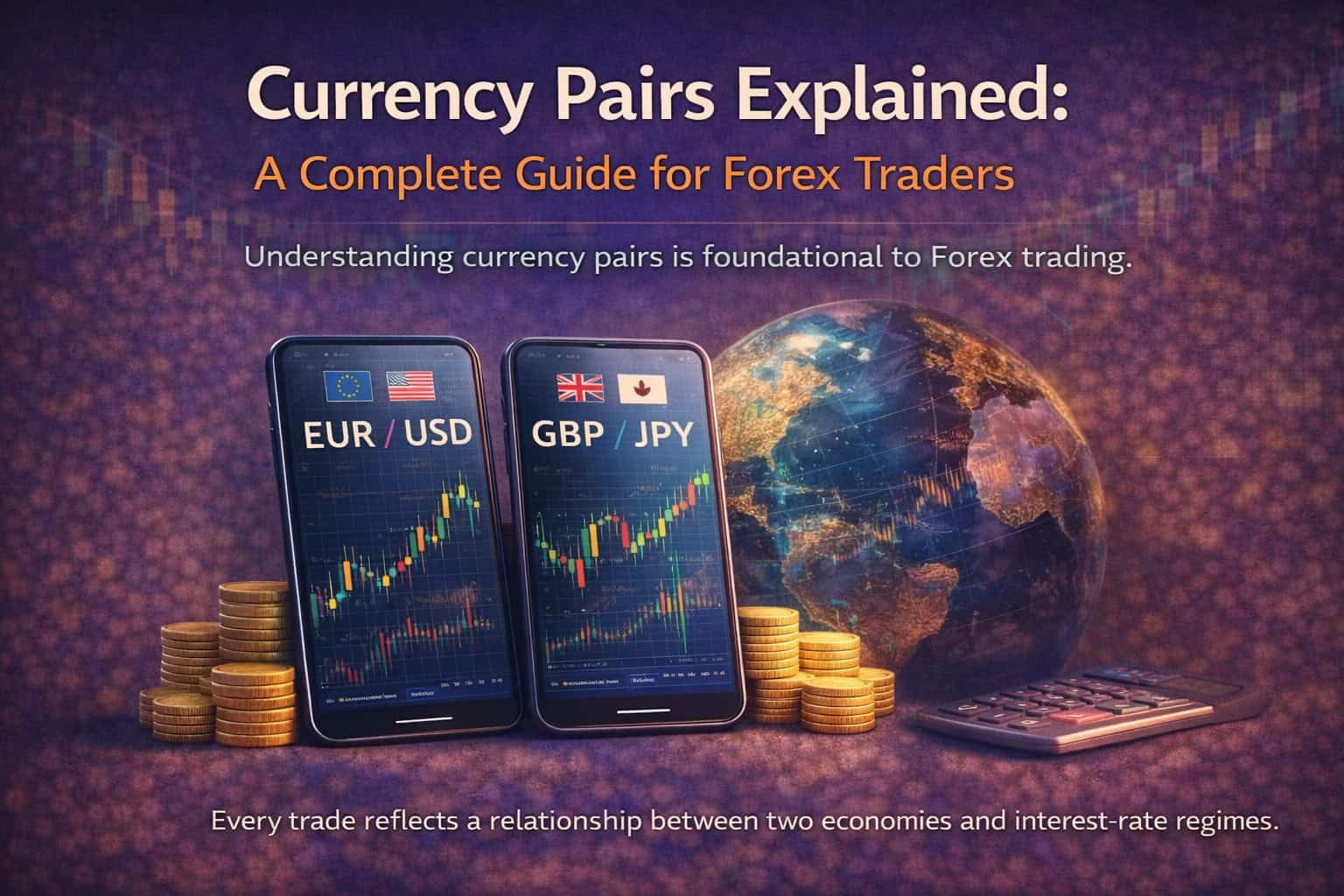
Understanding currency pairs is foundational to Forex trading.
Every trade you place reflects a relationship between two economies, two interest-rate regimes, and two sets of market expectations.
Yet many traders focus on setups and indicators without fully understanding what they are trading.
This leads to poor pair selection, unnecessary volatility, and frustration—especially for traders trying to hold positions over days or weeks.
This guide explains the types of currency pairs available to retail Forex traders, how major, minor, and cross pairs differ, which pairs suit day, swing, and position traders, and why spreads vary so dramatically across the market.
TL;DR — Currency Pairs for Retail Forex Traders
- Currency pairs are not equal. Liquidity, spread size, volatility, and macro drivers vary widely across pairs.
- Major pairs (EUR/USD, USD/JPY, GBP/USD) offer tight spreads and high liquidity, making them ideal for newer and shorter-term traders.
- Minor (cross) pairs remove the U.S. dollar and often reflect cleaner long-term economic divergence, making them well-suited for position traders.
- Exotic pairs carry wider spreads and higher execution risk and are generally unsuitable for most retail traders.
- Spread size is driven by liquidity and risk, not broker preference—pairs with fewer participants cost more to trade.
- Position traders can trade the broadest range of pairs because longer-term targets reduce the impact of spreads and intraday noise.
What Is a Currency Pair?
A currency pair represents the exchange rate between two currencies.
- The base currency is listed first
- The quote currency is listed second
If EUR/USD is trading at 1.1000, it means:
- 1 euro equals 1.10 U.S. dollars
Forex trading always involves relative value.
You are never buying a currency outright—you are expressing a view on how one economy will perform relative to another.
The Three Main Types of Currency Pairs
Retail Forex traders typically trade three broad categories of currency pairs:
- Major Pairs
- Minor Pairs (Crosses)
- Exotic Pairs
Each behaves differently and attracts different types of traders.
Major Currency Pairs
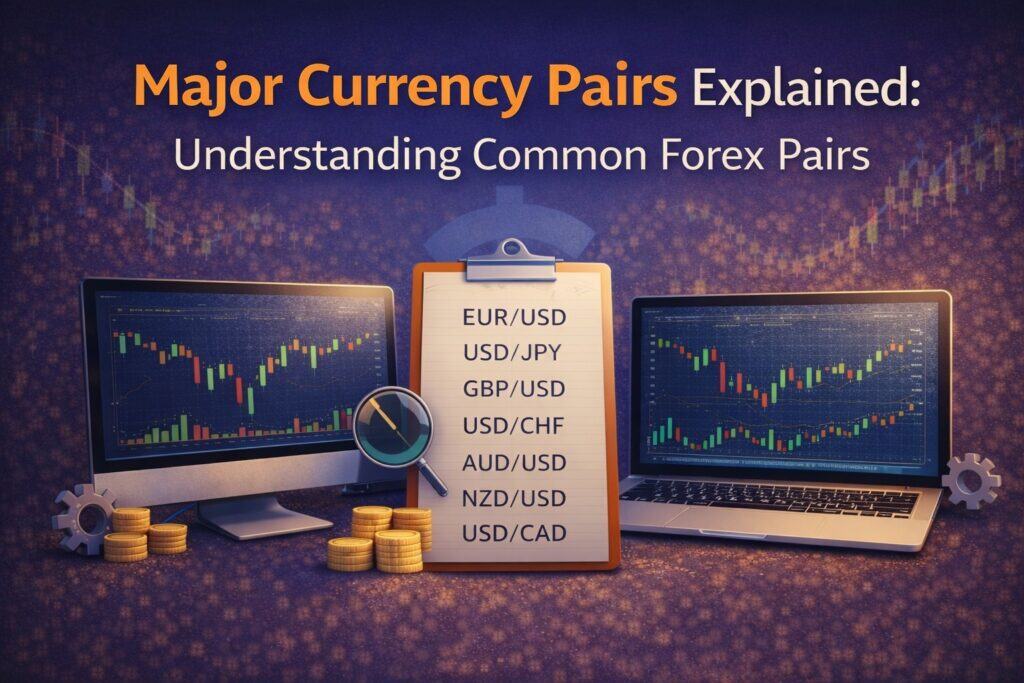
Major pairs always include the U.S. dollar (USD) and the most liquid global currencies.
Common Major Pairs
- EUR/USD
- USD/JPY
- GBP/USD
- USD/CHF
- AUD/USD
- NZD/USD
- USD/CAD
Why Major Pairs Are So Popular
- Extremely high liquidity
- Tight spreads
- Deep institutional participation
- Reliable technical structure
Because they are heavily traded by banks, corporations, hedge funds, and central banks, major pairs tend to respect support, resistance, trends, and momentum more cleanly.
Pros
- Lowest transaction costs
- Consistent execution
- Strong technical reliability
Cons
- Slower trends at times
- Overcrowded during major news events
Best suited for:
- Beginners
- Day traders
- Swing traders
- Position traders seeking stability
Minor Currency Pairs (Crosses)
Minor pairs do not include the U.S. dollar, but still involve major global currencies.
Common Minor Pairs
- EUR/GBP
- EUR/JPY
- GBP/JPY
- EUR/AUD
- EUR/CAD
- AUD/NZD
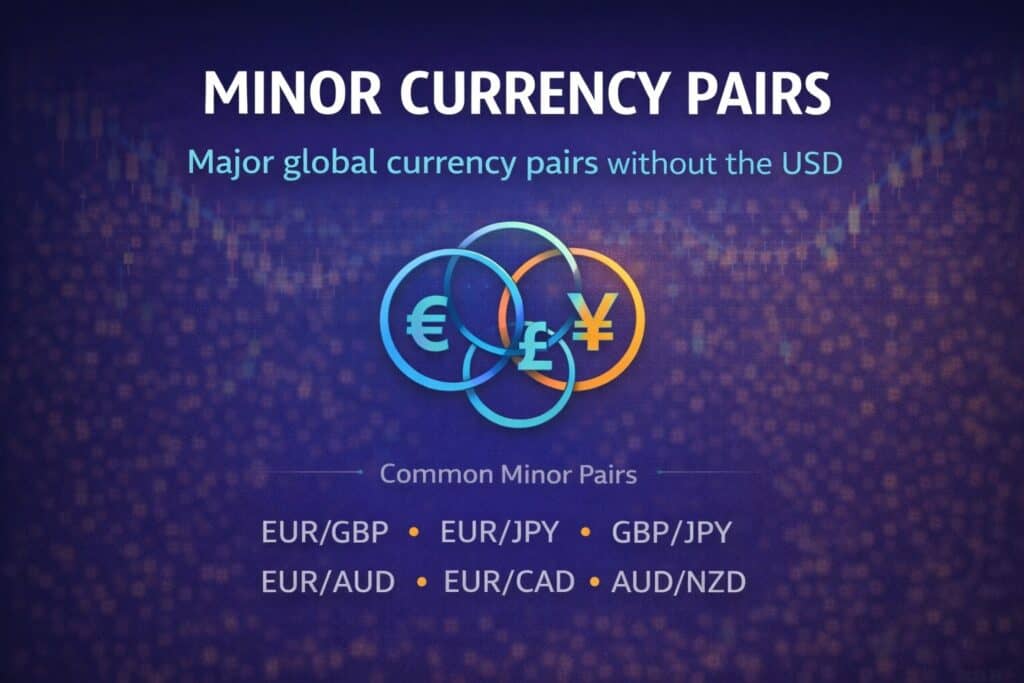
These pairs express relative strength between non-USD economies, making them especially useful for traders focused on macroeconomic divergence.
Why Position Traders Favor Minors
Cross pairs often trend more cleanly over longer horizons because they are less dominated by U.S. dollar flows and U.S. economic releases.
For example:
- EUR/AUD reflects European growth versus Australian commodity demand
- GBP/JPY reflects the UK monetary policy versus the Japanese yield suppression
Pros
- Strong trending behavior
- Cleaner macro narratives
- Less U.S. data noise
Cons
- Wider spreads than majors
- Slightly lower liquidity
Best suited for:
- Swing traders
- Position traders
- Macro-focused traders

Looking for a Strategy?
Download the Six Basics of Chart Analysis and sign up for Forex Forecast to learn a bottom-up approach to analyzing Forex markets and weekly market updates.
Exotic Currency Pairs
Exotic pairs involve one major currency and one emerging market currency.
Examples
- USD/TRY (Turkish lira)
- USD/ZAR (South African rand)
- USD/MXN (Mexican peso)
- EUR/PLN (Polish zloty)
Why Exotics Are Risky
Exotic currencies are often affected by:
- Political instability
- Capital controls
- Thin liquidity
- Sudden intervention
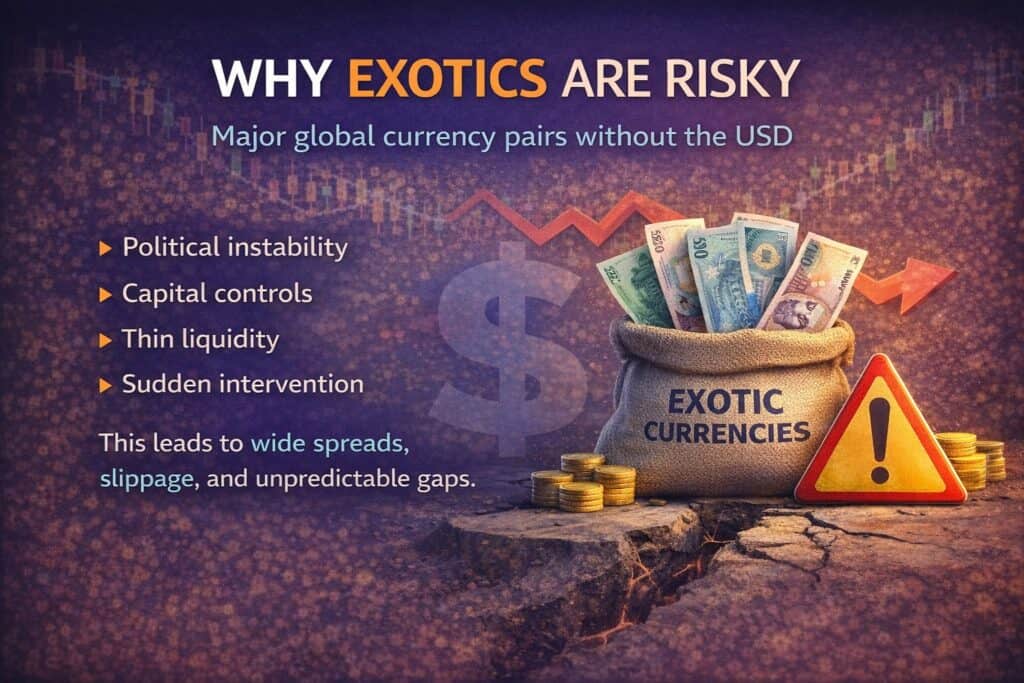
This leads to wide spreads, slippage, and unpredictable gaps.
Pros
- Large price moves
- Strong carry opportunities at times
Cons
- High transaction costs
- Extreme volatility
- Execution risk
Best suited for:
- Experienced traders only
- Long-term macro specialists
Why Some Currency Pairs Have Tight Spreads and Others Do Not
Spreads exist because brokers must source liquidity and manage risk.
Narrow Spreads Occur When:
- Liquidity is deep
- Trading volume is high
- Many buyers and sellers exist
This is why EUR/USD often has a spread near zero during liquid hours.
Wide Spreads Occur When:
- Liquidity is thin
- Market participation is low
- Volatility risk is high
This is common in:
- Exotic pairs
- Off-market hours
- News-sensitive currencies
Retail brokers pass these costs directly to traders.
Why Position Traders Can Trade a Wider Variety of Pairs
Position traders operate on weekly charts, which changes the equation entirely.
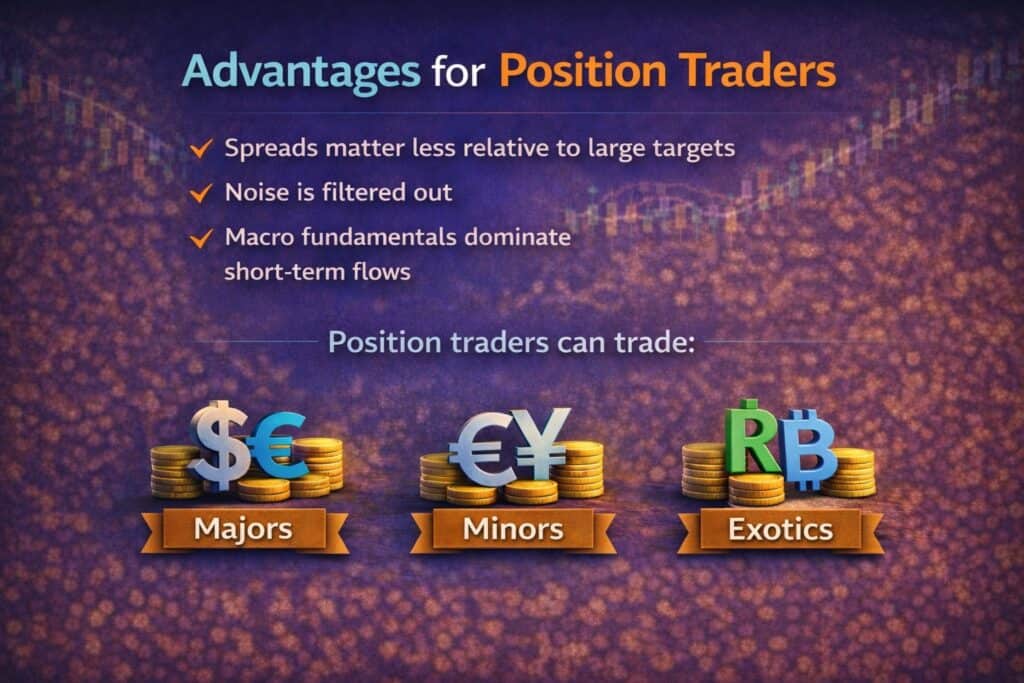
Advantages for Position Traders
- Spreads matter less relative to large targets
- Noise is filtered out
- Macro fundamentals dominate short-term flows
Position traders can trade:
- Majors
- Minors
- Select exotics (with caution)
What matters most is structural clarity, not micro-costs.
Currency Pairs and Fundamental Relationships (Position Trader Focus)
| Currency Pair | Core Relationship | Why It Matters for Position Traders |
| EUR/USD | Eurozone vs U.S. growth & rates | Global risk benchmark |
| GBP/USD | UK policy vs Fed policy | Volatility + trend potential |
| USD/JPY | Yield differentials | Clean macro-driven trends |
| EUR/JPY | Risk sentiment proxy | Strong directional moves |
| EUR/AUD | Growth vs commodities | Long-term divergence trades |
| AUD/NZD | Regional economic spread | Tight structure, slow trends |
| USD/CAD | Oil vs U.S. growth | Commodity-driven cycles |
| EUR/GBP | Policy divergence | Mean reversion + structure |
| USD/MXN | Carry trade dynamics | Macro-driven long trends |
Choosing Currency Pairs by Trading Style
| Trading Style | Preferred Pairs | Reason |
| Day Trading | EUR/USD, USD/JPY | Tight spreads, fast fills |
| Swing Trading | Majors + Minors | Balance of cost and movement |
| Position Trading | Majors, Minors, Select Exotics | Macro trends dominate |
Common Mistakes Traders Make with Currency Pairs
- Trading too many pairs without understanding relationships
- Ignoring spread costs relative to the timeframe
- Trading exotic pairs without experience
- Treating all pairs as technically identical
Currency pairs behave differently because economies behave differently.
TL;DR — Quick Summary
- Currency pairs represent relative economic performance
- Major pairs offer liquidity and tight spreads
- Minor pairs provide strong macro-driven trends
- Exotic pairs carry a higher risk and cost
- Position traders can trade the widest range of pairs
- Spreads vary due to liquidity, risk, and participation
What’s the Next Step?
Evaluate your current currency pair selection honestly:
- Does it match your timeframe?
- Does it reflect a clear macro relationship?
- Does it reduce noise—or increase it?
If you want a position-trading framework that works across all currency pairs, platforms, and market conditions, learn the Six Basics of Chart Analysis.
The Six Basics of Chart Analysis and Forex Forecast
This framework is built for position traders who focus on weekly and daily charts.
It emphasizes price structure, market context, and disciplined decision-making—so you can trade fewer pairs, hold trades longer, and stay aligned with high-probability trends.
It keeps your attention where it matters most: structure, context, and patience—not constant execution or short-term fluctuations.

Frequently Asked Questions
Are major pairs always better than minor pairs?
No. Majors are cheaper to trade, but minors often trend more cleanly for position traders.
Why do spreads widen during news events?
Liquidity dries up as risk increases, forcing brokers to protect themselves.
Can beginners trade minor pairs?
Yes, but only after understanding the underlying economies and volatility.
Do currency pairs behave differently technically?
Yes. Structure and volatility vary significantly by pair.
Below is a 5-question quiz with a clear answer key, written to match the article’s tone and structure and suitable for direct insertion near the end of the post.
Knowledge Check: Currency Pairs in Forex Trading
1. What defines a major currency pair in Forex trading?
A. It has the highest volatility
B. It includes two emerging market currencies
C. It is only traded by institutions
D. It includes the U.S. dollar and a highly liquid currency
2. Why do position traders often prefer minor (cross) currency pairs?
A. They have the tightest spreads
B. They avoid macroeconomic influence
C. They often reflect cleaner long-term economic divergence
D. They move faster than major pairs
3. What is the primary reason some currency pairs have wider spreads than others?
A. Broker manipulation
B. Lower liquidity and higher risk
C. Chart pattern inconsistency
D. Timeframe selection
4. Which currency pair type generally carries the highest execution and volatility risk for retail traders?
A. Major pairs
B. Minor pairs
C. Exotic pairs
D. Regional cross pairs
5. Why can position traders trade a wider variety of currency pairs than day traders?
A. They use leverage differently
B. They trade during lower-volume sessions
C. Spread costs are less significant relative to larger targets
D. They rely solely on indicators
Answer Key
- D — Major pairs always include the U.S. dollar and a highly liquid global currency
- C — Minor pairs often reflect clearer long-term macroeconomic divergence
- B — Wider spreads are driven by lower liquidity and higher risk
- C — Exotic pairs carry the highest volatility, spread, and execution risk
- C — Position traders target larger moves, making spread costs less impactful
Forex Trading Disclosure Statement
Risk Warning:
Forex trading involves significant risk and may not be suitable for all investors. You may lose more than your initial investment. Only trade with money you can afford to lose.
Market Risks and Volatility:
Currency prices move based on global events, economic data, and geopolitical changes. Volatility can cause sudden, unexpected losses.
Leverage Risks:
Leverage increases both potential gains and potential losses. Use it cautiously.
Technology Risks:
Trading platforms can experience outages, delays, or pricing errors that affect trades.
No Guaranteed Results:
Past performance does not guarantee future outcomes. No strategy eliminates all risk.
Educational Purpose Only:
The information provided is for education, not financial advice. Consult a licensed professional before trading.
Responsibility:
You are responsible for your own trading decisions and risk management.